OPP Meeting Summary: EP LIBE Committee - Laying down rules to prevent and combat child sexual abuse (26 April 2023)
A summary of the consideration of draft report is now available.
Rapporteur Javier Zarzalejos (EPP, Spain)
- the Draft Report came after 8 Shadow meetings from which very valuable input came;
- was important to highlight the size of the issue for MEPs to realize the weight of their responsibility on this file;
- this Regulation was not created to hunt down offenders but to protect children;
- said that labeling this file as ‘chat control’ was a regrettable way to play down its importance;
- welcomed the Commission’s proposal which recognized the need for a Regulation on child sexual abuse material (CSAM);
- acknowledged the commitment of Commissioner Johansson;
- very few companies made the most of the legal tools to fight CSAM;
- risk assessment (RA) would be central to the functioning of the Regulation, which was introduced by the Digital Services Act (DSA);
- the Draft Report suggested an additional RA focused on CSAM;
- RA would also be the basis for the adoption of mitigation measures;
- detection orders should be the last resort;
- companies willing to adopt voluntary measures would be allowed to do so on the basis of authorization by the competent national authorities;
- noted unanimous support for stronger prevention measures;
- insisted that victims and survivors had the right to be involved;
- proposed the establishment of a victims and survivors consultation forum;
- it should be associated with the management of the EU Center;
- was fully aware of the need to put in place safeguards to prevent the negative impact of the measures to detect and remove CSAM;
- took into account a number of measures from the opinion of the European Data Protection Supervisor (EDPS);
- emphasized that there were no general monitoring obligations imposed by this Regulation;
- detection orders and mitigation measures would be limited in time and would be decided upon by a judicial authority;
- detection would be limited to an identifiable part or component of a service such as a specific channel of communication;
- the intervention of the EDPS would play a key role in the deployment of technologies to detect new CSAM and grooming;
- the EU Center would be a cornerstone of the new framework;
- said that what was illegal offline should be illegal online.
Interventions from the Shadow Rapporteurs
Paul Tang (S&D, Netherlands)
- said the internet was like leaving a child alone in a big city, anything could happen;
- a key priority according to law enforcement agencies should be safety by design;
- there should be user-reporting tools, to report suspicious and malicious content;
- should oblige online intermediary services to install safety measures such as parental control, which lacked in the Report;
- breaking end-to-end encryption (E2EE) would be neither necessary nor proportionate;
- welcomed Article 6A which would protect E2EE;
- the detection orders should be more specific to target certain individuals or groups of individuals.
Hilde Vautmans (RE, Belgium)
supported the current text as it would put the victims at the center and would offer a solution to a big problem;
agreed with the Rapporteur that all material should be included (new and known material as well as grooming);
insisted that law enforcement could not possibly detect all CSAM due to the large amounts;
said that technologies deployed to detect CSAM were effective;
insisted that this legislation’s purpose was not to allow platforms to spy on its users.
Patrick Breyer (Greens/EFA, Germany)
- stated that this legislation managed to divide everyone;
- was convinced children would be better protected if the text kept the parts on which everyone agreed along with the approaches described by MEP Tang;
- the scanning orders should be limited to persons presumably involved in CSA;
- the Draft Report went in the right direction but it did not implement what all independent legal experts warned about;
- the need to exclude people who had nothing to do with CSA;
- age verification requirements should be removed to protect the right to communicate anonymously and avoid app censorship;
- should mandate specific measures to make services safe by design;
- should make it mandatory to remove CSAM at its source;
- the EU Centre should focus on prevention, on victim support, research, and best practices for law enforcement.
Annalisa Tardino (ID, Italy)
- thanked the Rapporteur for all of his work;
- the testimonies of victims were very touching and should motivate all Shadows to find a good compromise on this text;
- the Commission proposal was good but the Draft Report drastically improved it;
- the option to maintain flagging orders for new pornographic material;
- Europol mentioned that new technologies could help save victims from abuses;
- this text was more in line with the joint recommendations from the EDPS;
- many criticisms emerged from the business on the obligations they would face;
- prevention measures should be boosted;
- young people should be taught how to use social media responsibly;
- reiterated her support for the proposal.
Cornelia Ernst (The Left, Germany)
the Commission proposal contained many previsions she said were illegal such as the scanning measures;
the goals would not be achieved by implementing chat controls, which would lead to surveillance;
did not agree with those who wanted to move forward with the risks of mass surveillance brought by the text;
thanked the Rapporteur for the changes he made to the proposal but these should not only be cosmetic;
measures concerning E2EE should also be considered.
EP FEMM Rapporteur Heléne Fritzon (S&D, Sweden)
according to the in hope network, an estimated 96% of the victims of CSA in 2021 were girls and the perpetrators were mostly men;
suggested a series of amendments to reinforce the prevention measures, including awareness-raising campaigns, tailored by age and gender;
proposed a specialized response and support to victims and survivors with an integrated gender perspective;
proposed the establishment of an advisory board representing children’s rights experts and survivors;
saw the need to strengthen overall data collection disaggregated by age and gender.
EP BUDG Rapporteur Niclas Herbst (EPP, Germany)
- thanked the Rapporteur for taking some of the BUDG Opinion’s points into the Draft Report;
- the EU Center would be central in the implementation of the Regulation;
- the BUDG Opinion focused on the funding of the agency;
- compared their Opinion with the one from LIBE, which had a similar approach to reintegrating the tasks of the executive board;
- the Parliament (EP) representative should be given voting rights in the management board;
- said that the EP BUDG Committee needed more time to process the impact assessment of the EDPS;
- the EU Center should not become a new agency but be shared between Europol and the Member States (MS) to make it more cost-efficient.
Interventions from other Speakers
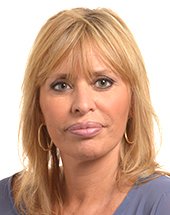
Alessandra Mussolini (EPP, Italy)
- said the internet was the hardest place to control in terms of safety;
- the proposal should be more flexible;
- believed it would be discriminatory to divide the proposal between men and women due to the plurality of genders;
- said the binary system was outdated;
- victims should be protected correctly and funds should be available for that.
Moritz Körner (RE, Germany)
- was very happy with the text so far and the progress made by all Rapporteurs;
- a study showed that the technologies to detect new CSAM and grooming were not effective enough;
- it would overwhelm the authorities with many false negatives.
Abir Al-Sahlani (RE, Sweden)
called out MEP Breyer for being too negative about the text and falsely calling it chat control;
asked the Rapporteur whether the text would allow toy-making companies to report potential CSA and CSAM.
Annika Bruna (ID, France)
stated that about 1 child in 5 fell victim to CSA while children with disabilities were more often affected;
said the fight against CSA was a collective responsibility;
she would table amendments to boost prevention measures, flagging measures, and support victims.
Javier Zarzalejos (EPP, Spain)
thanked all the speakers for their contributions;
said the discussion was essential to convergence toward an agreement and presenting a solid and effective text;
safety by design was introduced in the Report;
appreciated the contribution from the EP FEMM Committee on the gender perspective;
would have a more detailed assessment of the reporting situation for toy-making companies.
Related Procedure(s)
The simultaneous interpretation of debates provided by the EU institutions serves only to facilitate communication amongst the participants in the meeting. It does not constitute an authentic record of proceedings. One Policy Place uses these translations so this text is only a guide and should not be relied on as an official account of the meeting. Only the original speech or the revised written translation of that speech is authentic.






 DeHavilland